If you’re tired of shaving or waxing over your tattoos again and again, you’ve probably wondered whether laser hair removal can help. Unfortunately, laser hair removal isn’t safe to perform directly over tattoos because the treatment can damage both your skin and the tattoo itself. The good news? There’s a proven, FDA-approved alternative that works beautifully on tattooed skin.
Laser hair removal relies on concentrated beams of light to eliminate unwanted hair. These beams detect melanin, which is the natural pigment that gives hair its color, and channel energy directly into each follicle. The resulting heat disrupts the follicle’s ability to grow new hair. Due to its effectiveness across various skin types, laser-based skin treatments have become a popular cosmetic choice in the United States. In fact, laser procedures such as hair removal, IPL and tattoo removal account for over 3.1 million treatments annually.
Here’s the problem — the laser can’t differentiate between the melanin in your hair and the dense pigment concentrated in tattoo ink. When you perform hair removal over tattoos, the laser absorbs energy from both the hair and the tattoo. Because tattoo ink contains a much higher concentration of pigment than a hair follicle, the laser delivers excessive energy to that area. This creates significant risks, including burns, blistering, scarring and permanent changes to your tattoo’s appearance. Colors may fade, blur, or distort entirely.
A trained professional will refuse to use laser treatments to remove hair from a tattooed area for these exact safety and aesthetic reasons. The risk isn’t worth it, no matter how much you want a permanent solution.
Since laser relies on targeting pigment, you need a method that works independently of color. That’s where electrolysis comes in.
During treatment, a licensed electrologist uses a tiny wire or probe to reach each individual follicle, then delivers a precise electric pulse to the root. This technique stops hair growth at the source and because it doesn’t depend on detecting pigment, the surrounding skin and tattoo remain completely untouched and safe throughout the process.
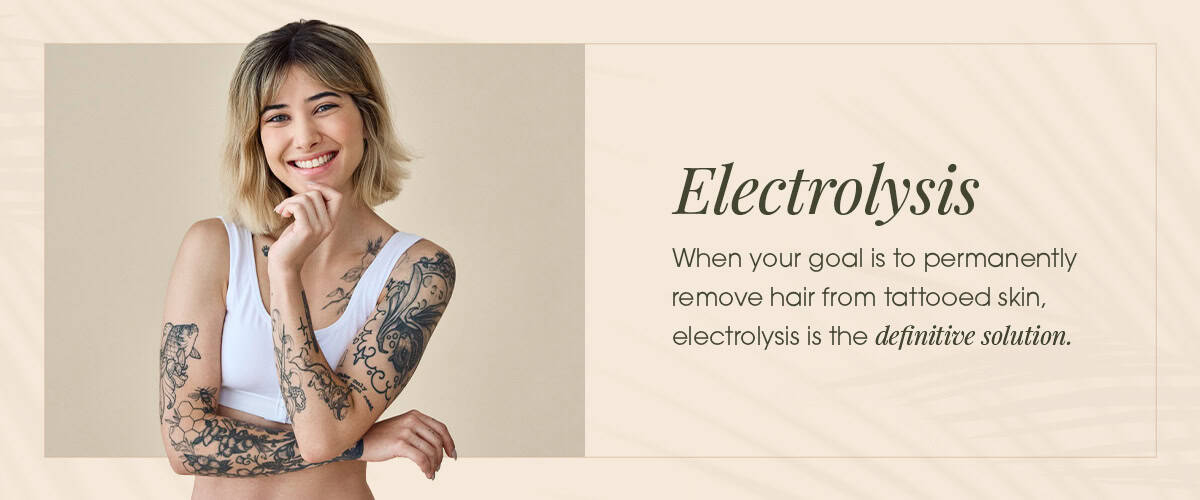
Electrolysis stands out as the only FDA-approved method of permanent hair removal. Laser hair removal, by comparison, is classified as permanent hair reduction, meaning it significantly reduces hair growth without ensuring complete elimination. When your goal is to permanently remove hair from tattooed skin, electrolysis is the definitive solution.
Whether you’re addressing small tattooed areas or need more comprehensive treatment, electrolysis offers the flexibility and safety that laser can’t provide for inked skin.
Knowing what to expect from electrolysis can help you feel confident in your decision. The process begins with a professional consultation where a certified electrologist assesses your specific needs, examines the treatment area and discusses your goals. This is your opportunity to ask questions about timelines, pricing and what the sessions will involve.
During treatment, you’ll feel a brief sensation as the probe enters each follicle and the electrical current is applied. Most people describe it as a quick pinch or tingling. For those concerned about discomfort, topical numbing options are available and some practices offer advanced comfort techniques to make sessions more pleasant.
Session frequency and duration depend on the size of the area and your hair growth patterns. Smaller areas may require just a few appointments, while larger zones benefit from a structured treatment plan.
The key to successful results is working with a licensed, experienced electrologist who understands how to treat tattooed skin safely and effectively.
Let’s answer some common questions about hair removal on tattooed areas.
The laser targets pigment indiscriminately, which means it absorbs energy from tattoo ink just as it does from hair follicles. This can result in severe burns, blistering, permanent scarring and irreversible damage to your tattoo’s design, including color fading and distortion. Trained professionals will not perform laser hair removal directly over tattoos because the aesthetic and safety risks are too great.
Electrolysis targets the follicle directly with electrical current rather than relying on pigment detection, which means it leaves your tattoo ink completely unaffected. It’s the only FDA-approved method for permanent hair removal and works safely on all skin types and colors, making it the ideal solution for tattooed areas.
The number of sessions depends on the treatment area size and your hair growth patterns. Smaller areas typically require few appointments, while larger zones need a more structured plan. During your consultation, a certified electrologist can provide a personalized timeline based on your specific needs.
Most people describe the sensation as a quick pinch or tingling. If you’re concerned about discomfort, topical numbing options are available and some practices offer advanced comfort techniques to make sessions more pleasant.
Electrolysis offers a safe, permanent solution for hair removal on tattooed areas. At Cirine® Hair Removal & Skin Care, our licensed electrologists specialize in treatments that work alongside your tattoos without compromising your skin or ink. Whether you’re seeking traditional electrolysis or exploring options for larger areas, we’re here to help you achieve smooth, hair-free skin with confidence. Schedule your consultation today to discuss the best approach for your needs.